
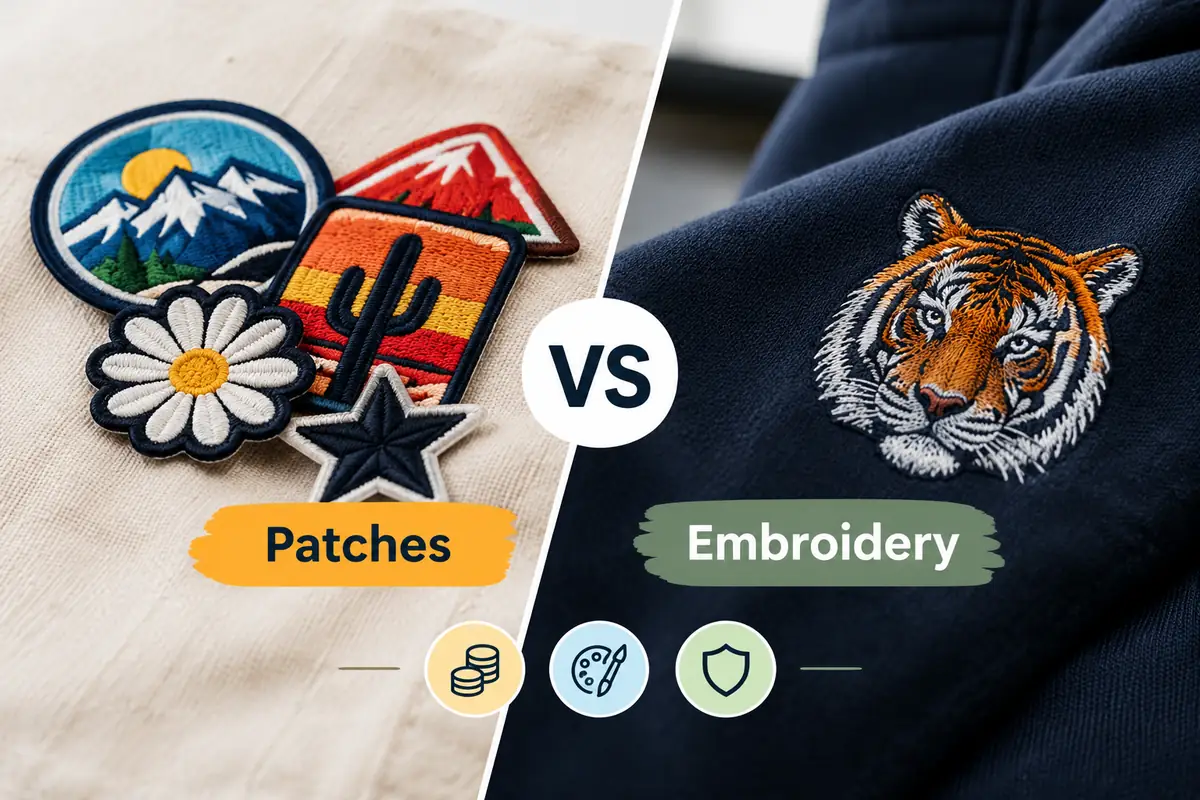
Patches vs Embroidery: Cost, Style & Durability
The decoration method can influence both the appearance and lifespan of the finished product when customising your apparel. Patches and embroidery are two popular choices, but each offers different advantages depending on the design and your budget. Custom embroidered patches with no minimum can be a practical option for smaller projects or businesses that need flexibility with order quantities.
The right choice depends on how the design will be used. A business might want consistent branding on staff uniforms, while a sporting club may need detailed logos that can be transferred between garments. Keep reading to understand the differences and choose an option that suits your project without spending more than necessary.
Embroidery versus Patches – What is the Difference?
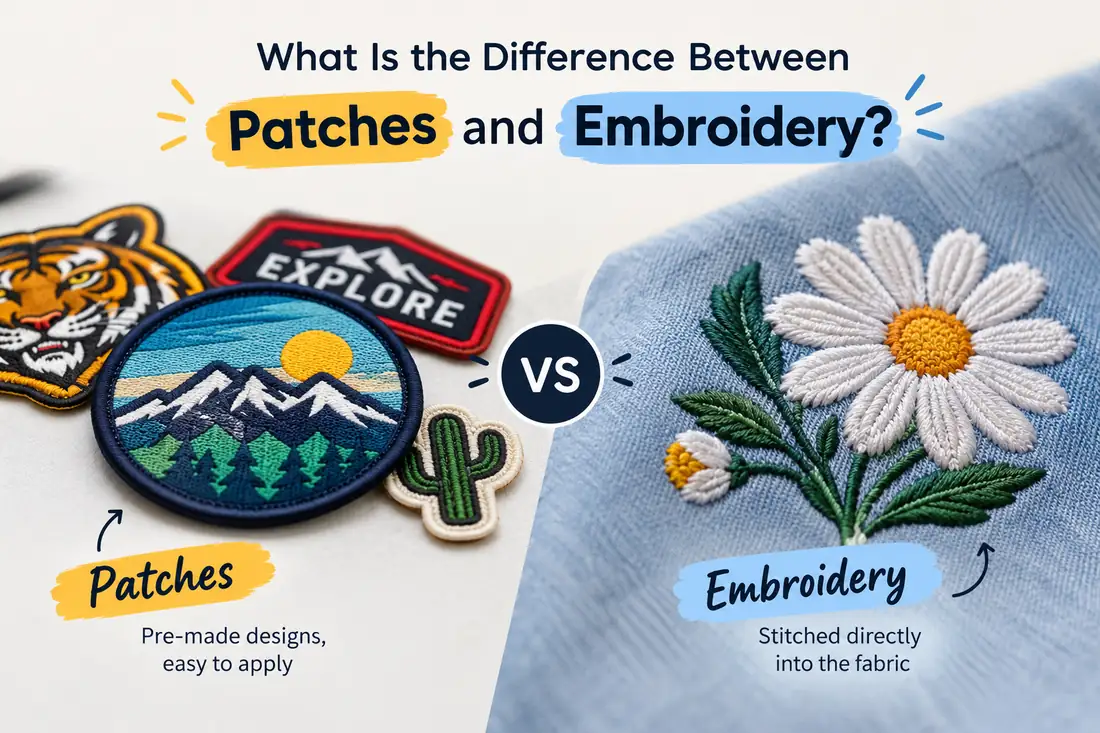
The main difference between patches and embroidery is how the design is applied.
| Embroidery | Patches |
| Embroidery involves stitching a design directly into the fabric using thread. | Patches are separate pieces of material with designs that can be attached to clothing through sewing and other methods. |
| Direct stitching creates a finish that becomes part of the garment itself. | A patch can be manufactured separately before being attached to the finished item. |
Both methods can produce professional results. The better choice depends on the complexity of the artwork along with the type of fabric and whether the design needs to be removable or replaceable.
Here is more you need to know when it comes to the direct embroidery vs patch discussion.
- Comparing the Cost
Cost is often one of the first considerations when ordering custom apparel. But the cheapest option depends on the quantity and production method.
- Embroidery costs are influenced by stitch count, design complexity, thread colours and the time required to complete the work. A large logo with dense stitching may cost more than a small, simple design. Some suppliers also charge a setup fee to prepare the digital embroidery file.
- Patch production involves its own expenses, including the artwork preparation, manufacturing and attachment. Ordering in bulk can reduce the cost per patch, especially when the same design is used across multiple garments.
Always request quotes for the complete order instead of comparing individual decoration prices alone. Attachment, garment preparation and setup charges can affect the final amount.
- Style and Appearance
Appearance is another important factor in the patch vs embroidery decision, especially when a logo needs to reflect a brand’s identity.
- Embroidery creates a textured finish through raised threads and is known for adding a traditional and professional appearance. It works well for company logos, school uniforms, polo shirts and caps. The stitched texture can also add depth to simple lettering and symbols.
- Patches offer more flexibility in shape and finish as they allow complex artwork, bold colours, woven details and even raised PVC designs. Their borders can also create a defined outline around the logo.
The woven vs embroidered patches comparison matters when choosing between two common patch styles. Woven patches use finer threads woven together, which makes them suitable for small lettering. Embroidered patches have more pronounced stitching and a textured surface.
Think about the final look you want to achieve. Embroidery often suits understated branding, while patches can make a logo appear as a separate design element.
- Durability and Everyday Use
Both of the methods can last well when produced properly and are cared for according to the manufacturer’s instructions.
Embroidery gets stitched directly into the fabric, so there is no separate patch edge that can lift away. But dense stitching can cause puckering on lightweight materials, and repeated washing can also have an effect on the thread appearance.
Patches can also be durable when made from suitable materials and attached securely:
- Sew-on patches generally provide a strong attachment.
- Iron-on options depend on the adhesive, fabric compatibility and correct application.
- Hook-and-loop patches offer the advantage of being removable, although their fastening may collect lint and lose grip with repeated use.
Consider how much movement and exposure to moisture the garment will experience for workwear and frequently washed uniforms. A durable design will still need a suitable attachment method to perform well.
- Design Complexity and Flexibility
There are a few design result considerations that you need to keep in mind.
- Embroidery works well with clear lettering, simple symbols and logos that remain readable when converted into stitches. Very small text and complex photographic details can be difficult to reproduce accurately.
- Patches let designers explore a list of materials and visual effects. Woven construction can work for fine details, while printed patches can reproduce gradients more easily than traditional stitching.
Most of the suppliers also offer an AI patch generator on their website to help you explore possible layouts and visual concepts before requesting a production-ready design. The final artwork should still be checked by the supplier to ensure that it can be manufactured accurately.
Don’t forget to consider embroidery vs heat transfer when the design includes detailed graphics and a flat finish. Heat transfer makes use of heat to apply a design to fabric. On the other hand, embroidery creates a textured result with thread. The most suitable method depends on the artwork and your garment.
5 Types of Patches to Consider
These 5 types of patches offer different advantages, so it helps to understand the available options before making a decision.
| Patches | Uses |
| Embroidered patches | They are ideal for traditional logos and textured designs |
| Woven patches | This type is suitable if you want fine lettering |
| PVC patches | They offer a raised and flexible finish for outdoor gear |
| Printed patches | Works well for colourful artwork and detailed graphics |
| Chenille patches | They have a textured surface commonly used for varsity jackets |
The choice of patch affects not only appearance but also production cost and attachment requirements.
Which Option Should You Choose?
The decision depends on the purpose of the garment and the result you want.
- Embroidery is a strong option for simple logos that need a stitched finish directly on uniforms
- Patches are useful when you want more flexibility and when the same logo will be used across different products
When comparing embroidery vs patch options, consider the complete project rather than focusing on one feature. Ask suppliers for samples, confirm how the garment will be washed and compare quotes for the same design and order quantity.
FAQS
Can patches and embroidery be used on the same garment?
Yes. A garment can feature direct embroidery along with patches, but the placement and materials work well together.
Can embroidered logos be repaired if the thread breaks?
Minor thread damage can be repairable, depending on the design and extent of the damage. A specialist embroiderer can advise if the repair is practical.
Do custom patches come in different shapes?
Yes. A lot of suppliers offer standard shapes such as circles and rectangles, as well as custom-cut designs based on your artwork.
Wrapping Up
Patches and embroidery each have a place in custom apparel. Embroidery provides a classic look, while patches offer flexibility in design and attachment. Neither option is automatically more affordable or durable in every situation. An experienced iron on patches maker can help you choose suitable materials and finishes for your design.
Always consider your budget, artwork, garment material, and intended use to select a decoration method that meets your requirements and delivers a finish you’ll be happy with.

I am Kelly James, and I enjoy helping people by providing them with clear and meaningful writing. I love creating content that is easy to read, informative, and engaging. Whether I am working on articles, blog posts, or website content, I always focus on making sure every piece connects with the reader. I am always learning, exploring new ideas, and finding better ways to tell stories that people enjoy reading.